

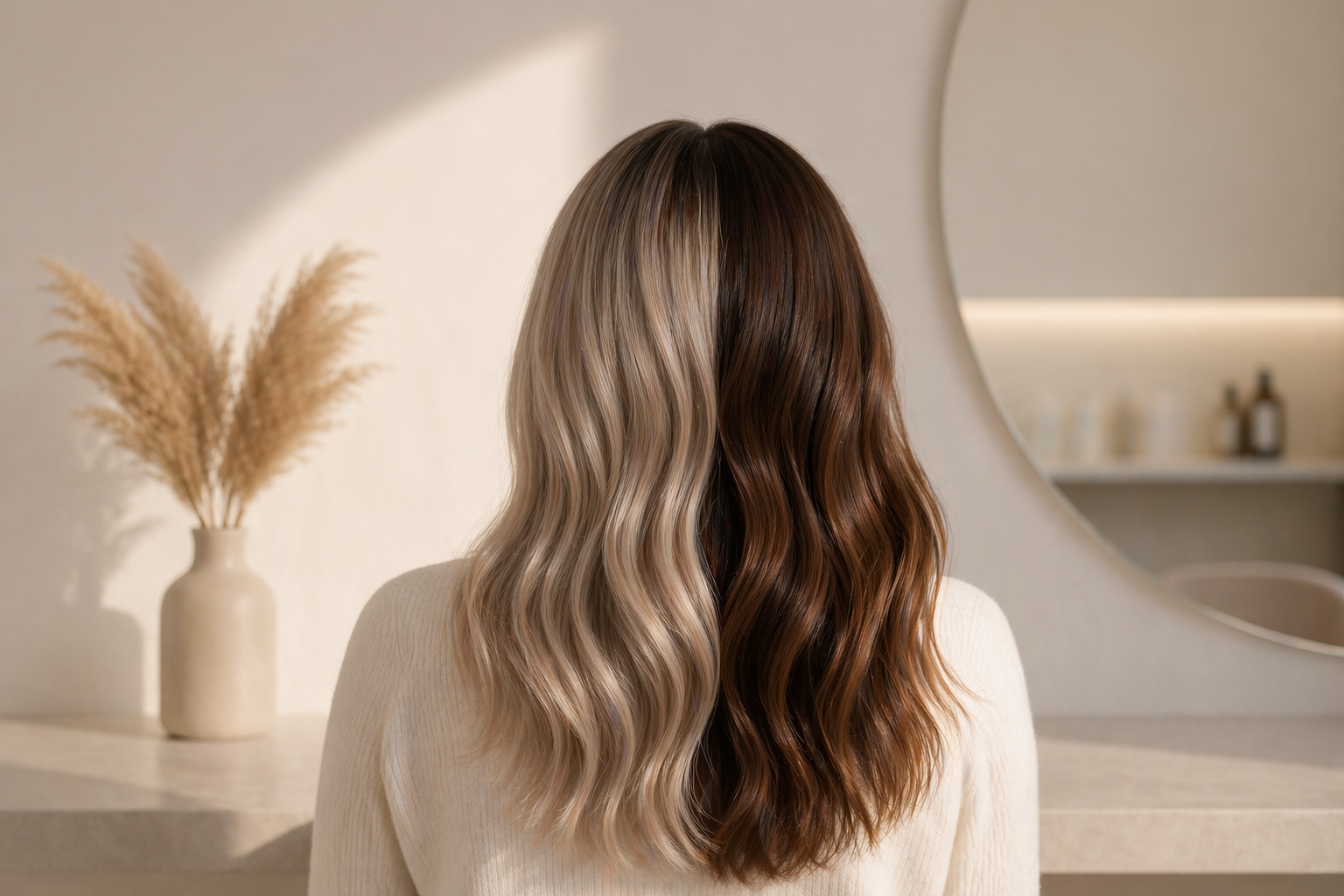
If your hair is blonde, lightened, highlighted, or color-treated, you have probably noticed that the tone can shift between salon visits. A fresh, cool shade can slowly start looking warmer, duller, or more brassy. That is exactly where pigmented shampoos come in.
Purple and blue shampoos are both designed to help maintain color at home, but they are not interchangeable. Even though the shades look similar, they do different jobs.
What Is the Difference Between Purple and Blue Shampoo?
The main difference is simple:
Purple shampoo helps neutralize yellow tones.
Blue shampoo helps neutralize orange and brassy tones.
This works because of basic color theory. Colors that sit opposite each other visually cancel one another out. Purple helps soften yellow. Blue helps reduce orange.
That is why choosing the right shampoo depends less on the label and more on the unwanted tone you are actually seeing in your hair.
Why Hair Turns Brassy Over Time
Even a beautiful salon color can start to change after a while. Hair is constantly exposed to washing, heat styling, sun, minerals in water, and everyday oxidation. Over time, cool shades can fade and warmer undertones begin to show through.
For blondes, this often looks like yellowing.
For brunettes or darker balayage tones, it can show up as orange or coppery brassiness.
A pigmented shampoo helps refresh the tone in between appointments and keeps the color looking cleaner for longer.
What Purple Shampoo Does
Purple shampoo is usually the go-to choice for blonde, bleached, silver, or highlighted hair that is starting to look too yellow.
If your hair has shifted into a buttery, golden, or slightly yellow tone and you want it to look cooler, brighter, or more neutral again, purple shampoo is usually the right option.
It is especially useful for:
- blonde hair
- platinum or icy tones
- highlighted hair
- light balayage
- silver or gray tones that are turning yellow
Purple shampoo is all about keeping light hair from looking too warm.
What Blue Shampoo Does
Blue shampoo is better suited for deeper shades that are developing orange, copper, or strong brassy warmth.
It is often a great option for brunettes, darker blondes, caramel balayage, and highlighted brown hair. If the hair is not turning yellow but instead looks noticeably orange or rusty, blue shampoo usually makes more sense.
It is especially useful for:
- brunette hair
- dark blonde hair with warm brassiness
- brown hair with balayage
- highlighted brunettes
- salt-and-pepper hair that needs a cooler finish
Blue shampoo helps deeper shades stay richer, cooler, and more polished.
Which One Is Right for Your Hair?
A good rule is to look at the tone that bothers you most.
If you are seeing mostly yellow, choose purple shampoo.
If you are seeing mostly orange or copper, choose blue shampoo.
Here is the easiest way to think about it:
- Blonde hair usually needs purple shampoo
- Brunette hair usually needs blue shampoo
- Highlighted or in-between shades depend on whether the brassiness looks more yellow or more orange
If your hair color sits somewhere between blonde and brunette, the undertone matters more than the overall depth.
Can Blue Shampoo Work on Blonde Hair?
Sometimes, yes. If blonde hair has a slightly orange or very warm brassy undertone rather than straight yellow, blue shampoo can be helpful. But in most classic blonde maintenance routines, purple shampoo is still the more common choice.
Can Purple Shampoo Work on Brown Hair?
Usually not as effectively. If brown hair is pulling warm, the issue is more often orange than yellow, and that is where blue shampoo tends to perform better.
How to Use Purple or Blue Shampoo Correctly
Pigmented shampoo works best when used with a little restraint. Overusing it can leave the hair feeling dry or make the tone look flat.
A few simple rules help:
- use it only as needed, not automatically with every wash
- focus on the areas where warmth shows up most
- do not leave it on longer than necessary
- always follow with a hydrating conditioner or mask
- if the formula feels too intense, alternate it with your regular shampoo
The goal is not to overload the hair with pigment. The goal is to gently keep the tone balanced.
What If You Still Are Not Sure?
This is very common, especially with balayage, mixed blonding services, or color that has several tones running through it. Hair can look yellow in one light and slightly orange in another, which makes choosing products confusing.
When that happens, the safest option is to have your tone assessed professionally. Sometimes what looks like a shampoo issue is actually a sign that the hair needs glossing, toning, or a small color refresh instead.
Final Takeaway
Purple and blue shampoos are both useful tools for maintaining color between salon visits, but they do different things.
Purple shampoo is best for yellow tones.
Blue shampoo is best for orange and brassy tones.
Choosing the right one can make a big difference in how fresh, cool, and polished your hair looks at home.
If you are not sure which shampoo fits your shade, or if your color has started to shift and you want a more tailored plan, you are always welcome at Nakama. We will help you understand what your hair actually needs and recommend the right care routine for your tone, texture, and color history.
Sometimes the smallest adjustment in home care is all it takes to keep salon color looking beautiful for much longer.
