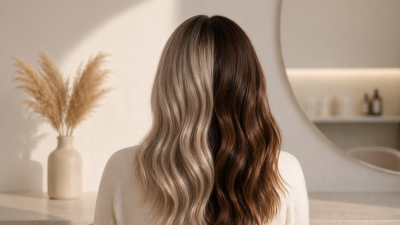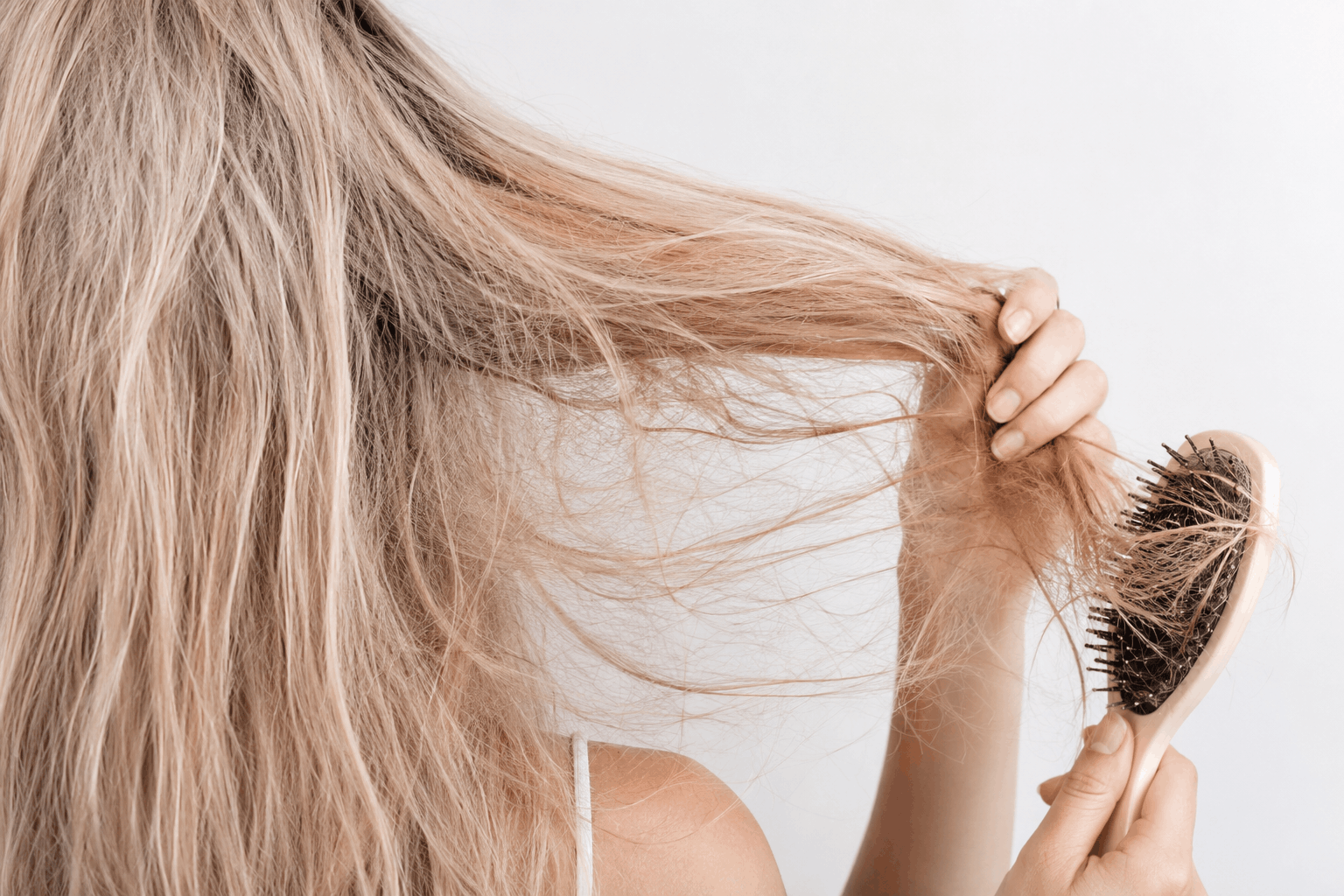
Beautiful blonde hair almost always costs more than it seems. And it’s not just about the price of the colour service. Bleaching changes the structure of the hair: it becomes more porous, loses moisture faster, tangles more easily and breaks more often.
After one harsh bleaching session, hair may feel dry and frizzy. After several, it can start stretching, snapping during brushing and breaking off at the ends. The good news: the condition can be noticeably improved. The bad news: one 30-second mask won’t fix it.
Here is a clear plan to help bring lightened hair back to a healthier state.
Start with a colourist
If your hair stretches, breaks, feels rough, clumps together or looks severely damaged after bleaching, it’s better to avoid experimenting at home. Overnight oils, random masks from the nearest store, harsh “blonde” shampoos or DIY treatments can make the situation worse.
A colourist needs to see the hair in its actual condition. This helps them understand what can be improved with care, where a professional treatment is needed, and where a haircut and time are the only real solution.
The less you do before the appointment, the easier it is for the stylist to assess the damage and choose a proper recovery plan.
Recovery takes time
Bleached hair doesn’t return to its previous condition in two weeks. Visible improvement usually takes from three or four months to a year, depending on the length, the level of damage and how fast your hair grows.
The progress is gradual: with the right care, hair tangles less, brushes more easily and starts to feel denser. Regular trims also slowly remove the weakest ends.
Another important point is the colouring process itself. Serious damage often happens when someone wants to go “just a little lighter” right away. Re-bleaching the same hair in one day can lead to breakage. A good colourist will suggest moving toward the desired shade in stages.
Put away hot tools
During recovery, it’s best to reduce blow-drying, straightening, curling and hot showers as much as possible. Damaged hair does not tolerate high heat well: it becomes drier, frizzier and more prone to breakage.
When styling is unavoidable, use a hairdryer on a cool or warm setting. Wash your hair with lukewarm water. This helps reduce frizz after washing and makes the hair easier to style.
Use a gentle shampoo and always condition
After bleaching, your old shampoo may no longer work for your hair. The hair has become more sensitive, so it needs gentle care designed for damaged or lightened lengths.
Purple shampoo should also be used carefully. It helps neutralise yellow tones, but it does not repair the hair. Using it once a week is usually enough, and it should be left on the lengths only briefly — typically up to two minutes.
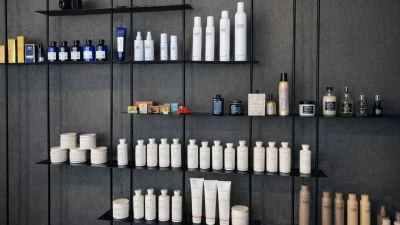
A basic home-care routine should include a shampoo and conditioner from a line made for damaged or bleached hair. From the products available in our salon, these are good options:
- Keune Care Blonde Savior Shampoo — a line created specifically for lightened hair. It gently cleanses and helps maintain the tone.
- Davines NOUNOU Shampoo and Davines NOUNOU Conditioner — a good choice for dry and heavily damaged hair.
- CHI Royal Treatment Bond&Repair Shampoo and Conditioner — care focused on repairing bonds inside the hair.
Conditioner is essential after every wash. Wet bleached hair is especially fragile: it stretches, tangles and breaks easily. Conditioner smooths the lengths and helps detangle the hair with less damage.
Use a mask once a week
Bleached hair needs a regular mask. Shampoo cleanses, conditioner smooths, and a mask gives richer care thanks to a higher concentration of ingredients and longer processing time.
For most hair, once a week is enough. If the hair is severely damaged, twice a week can work, but using a mask every other day won’t speed up recovery. It can make the hair feel heavy, dull and greasy at the roots.
Good options:
- Keune Care Blonde Savior Mask — a mask from the line for lightened hair.
- Keune So Pure Repair Night Mask — an overnight format for more intensive care.
- CHI Luxury Black Seed Oil Revitalizing Masque — a mask with black seed oil that works well for dryness and breakage.
- Davines NOUNOU Hair Mask — a rich nourishing mask for damaged hair.
Alternate nourishment and repair
Damaged bleached hair usually needs two things at once: strength and elasticity. Products with proteins and bond-repair complexes help the hair look stronger and denser. Nourishing and moisturising masks make the lengths softer, more flexible and less dry.
It’s better to rotate different types of care. When the hair feels stiff and brittle, add more nourishment and moisture. When it feels too soft, stretches too much and doesn’t hold its shape, use care focused on repair and protein.
A simple routine: use a repair-focused mask one week, then a more nourishing mask the next. This keeps the routine balanced and prevents the hair from feeling overloaded.
Apply leave-in care after every wash
For bleached hair, leave-in care is a basic step. It helps with detangling, reduces frizz, protects the lengths and makes the hair look smoother.
Apply it to damp hair after gently towel-drying. The key is to use a moderate amount, especially near the roots.
Good options:
- Keune Care Blonde Savior Cream — a leave-in cream with heat protection for lightened hair.
- CHI Botanical Bliss Silk Infusion — a lightweight nourishing product for smoothness and softness.
You can also apply oil to the ends every few days, before bed or about an hour before washing.
- Keune So Pure Argan Oil — argan oil for dry ends.
- CHI Luxury Black Seed Oil Hot Oil Treatment — a more intensive option for occasional treatments when the hair needs extra care.
Oils and silicone-based finishing products work differently, and both can be useful. Oil adds softness and nourishment, while silicones help create a smooth protective film on the surface of the hair. The main thing is to avoid overloading the lengths and to cleanse the hair properly.
Trimming is part of recovery
If the ends are already split and breaking, a product in a jar won’t glue them back together. The most damaged part will keep breaking, and over time you may need to cut off more.
During recovery, it’s best to trim the ends every six to eight weeks. This keeps the shape neat, removes the weakest length and stops split ends from travelling higher.
The short version
First, show your hair to a colourist and assess the level of damage. At home, build a basic routine: gentle shampoo, conditioner, mask, leave-in care and oil for the ends. Alternate repair and nourishment. Put hot tools aside for a while. Trim the ends regularly.
Bleached hair can look and feel much better with a calm, consistent routine. The main thing is to avoid trying to fix everything in one day. That’s usually what damages the length even more.